Digital Product Passports (DPPs) are becoming an important part of the EU’s work towards more sustainable and circular products. Furniture is one of the product groups included in the EU’s plans, but the specific DPP requirements for furniture are not yet in force. The European Commission currently has an indicative timeline of 2028 for adopting the furniture-specific rules.
This gives the industry time to prepare, and in Sw4eden, that work has already started.
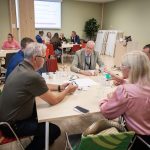
Interior Cluster Sweden has carried out several projects and activities to build knowledge about DPPs, share experiences and help companies understand what the transition could mean in practice. A recent example was a workshop at Möbelriksdagen 2026 in Växjö. This is one of several examples of how Interior Cluster Sweden collaborates with Linnaeus University to connect academic knowledge with the practical needs of the furniture and interior industry.
From knowledge to practical questions
Möbelriksdagen is an annual event for the Swedish furniture and interior industry, bringing together companies and other actors from the sector. At the 2026 event, Interior Cluster Sweden organised a workshop on DPP with participants from industry, academia, municipalities and standardisation organisations.
The workshop built on the work already carried out in Sweden and focused on practical questions: What information is needed? Where does it come from? Who is responsible for it? How can it be shared between different actors?
The discussions showed that a DPP is much more than a QR code or a digital label. It is about collecting, managing and sharing reliable information throughout a product’s life – from design and sourcing to manufacturing, use, repair, reuse and end of life.
A value-chain challenge
This makes DPPs a value-chain challenge. A furniture manufacturer cannot necessarily provide all the information on its own. Suppliers may hold information about materials, composition and origin, manufacturers about design and production, while repair, reuse and recycling actors need other types of information.
For companies, an important first step is therefore to understand what information already exists, where it comes from, who is responsible for keeping it accurate and where there are gaps.
This value-chain perspective also connects to Forest 4.0. Digital information and traceability can help strengthen links between different actors and improve the flow of information across the value chain. For the furniture and interior industry, this means looking beyond the individual product and considering how information is created, shared and used throughout its life cycle.
Preparing before the requirements are final
The detailed requirements for furniture DPPs are still being developed. The inclusion of furniture in the EU working plan does not itself mean that a DPP is already mandatory for furniture products. Future product-specific rules will define the detailed requirements and compliance timeline.
There are, however, practical steps companies can already take. These include reviewing existing product information, identifying gaps, clarifying responsibilities and working with suppliers to improve data quality and availability. Companies can also test how better product information could support customers, professional buyers, repair, reuse and recycling.
For SMEs, preparation does not have to start with a large technical solution. The workshop report suggests starting with one product family, building on information that already exists and learning through testing and collaboration.
The work carried out by Interior Cluster Sweden shows that the Swedish furniture and interior industry has already started this journey. The Möbelriksdagen workshop was another step towards a shared understanding of what DPPs can mean in practice – and how companies and the wider value chain can prepare for the requirements ahead.
Would you like to learn more?
Read the full report: https://forest40.lt/digital-product-passports-for-furniture-smes/